

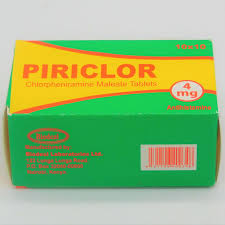

Description
Therapeutic action
– Sedating antihistamine
Indications
– Symptomatic treatment of minor allergic reactions (contact dermatitis, seasonal allergy, allergy to drugs,
food, etc.)
Presentation
– 4 mg tablet
Also comes in 2 mg/5 ml oral solution.
Dosage
– Child from 1 to 2 years: 1 mg 2 times daily
– Child from 2 to 6 years: 1 mg 4 to 6 times daily (max. 6 mg/day)
– Child from 6 to 12 years: 2 mg 4 to 6 times daily (max. 12 mg/day)
– Child over 12 years and adult: 4 mg 4 to 6 times daily (max. 24 mg/day)
Duration
– According to clinical response; as short as possible.
Contra-indications, adverse effects, precautions
– Administer with caution and monitor use in patients with prostate disorders or closed-angle glaucoma,
patients > 60 years and children (risk of agitation, excitability).
– May cause: drowsiness (caution when driving/operating machinery), anticholinergic effects (dry mouth,
blurred vision, constipation, tachycardia, disorders of micturition), headache, tremor, allergic reactions.
– Monitor combination with CNS depressants (opioid analgesics, antipsychotics, sedatives, antidepressants,
etc.).
– Avoid alcohol during treatment.
–Pregnancy: no contra-indication;
Remarks
– Chlorphenamine is less sedating than promethazine.
– Dexchlorpheniramine has the same indications:
- child 1 to 2 years: 0.25 mg 2 to 3 times daily
- child 2 to 6 years: 0.5 mg 2 to 3 times daily
- child 6 to 12 years: 1 mg 3 to 4 times daily
- child over 12 years and adult: 2 mg 3 to 4 times daily




Reviews
There are no reviews yet.